Guides
Start here
Can it, or will it?
The one distinction that explains most confusing cancer headlines.
02 · Classification GroupsGroups 1, 2A, 2B and 3
What each group means, and why the same group can hide very different risks.
03 · Reading HeadlinesAspartame, meat and the news
Two real cases that show how a hazard classification and an acceptable intake can both be true.
04 · IARCThe WHO’s cancer agency
Who runs IARC, since when, and how its evaluations are made.
Science profile
What Lyon is known for in science
Lyon’s science on this site follows one international agency and the city that hosts it.
- Cancer researchIARC, created in 1965 as the WHO’s specialised cancer agency, has its headquarters in Lyon.
- Evidence and riskIts Monographs judge how strong the evidence is that an agent can cause cancer.
- Science and societyThe Musée des Confluences brings together natural sciences, human sciences and technology.
- The birth of cinemaThe Lumière brothers patented the Cinématographe in 1895.
On the Atlas
Concept Cities route
Cities tied to ideas about how science is judged, funded and measured. Frascati gave its name to the rules for counting R&D. Atlas →
A TheScience.fm podcast
nauka.news
Science news explained without hype, including the headlines about what does and does not cause cancer.
Audio in Polish, with English subtitles and automatic English dubbing on YouTube.Lyon
Lyon, the place
The city behind the agency: its museums, its inventors and the places a visitor can see.
City & Region
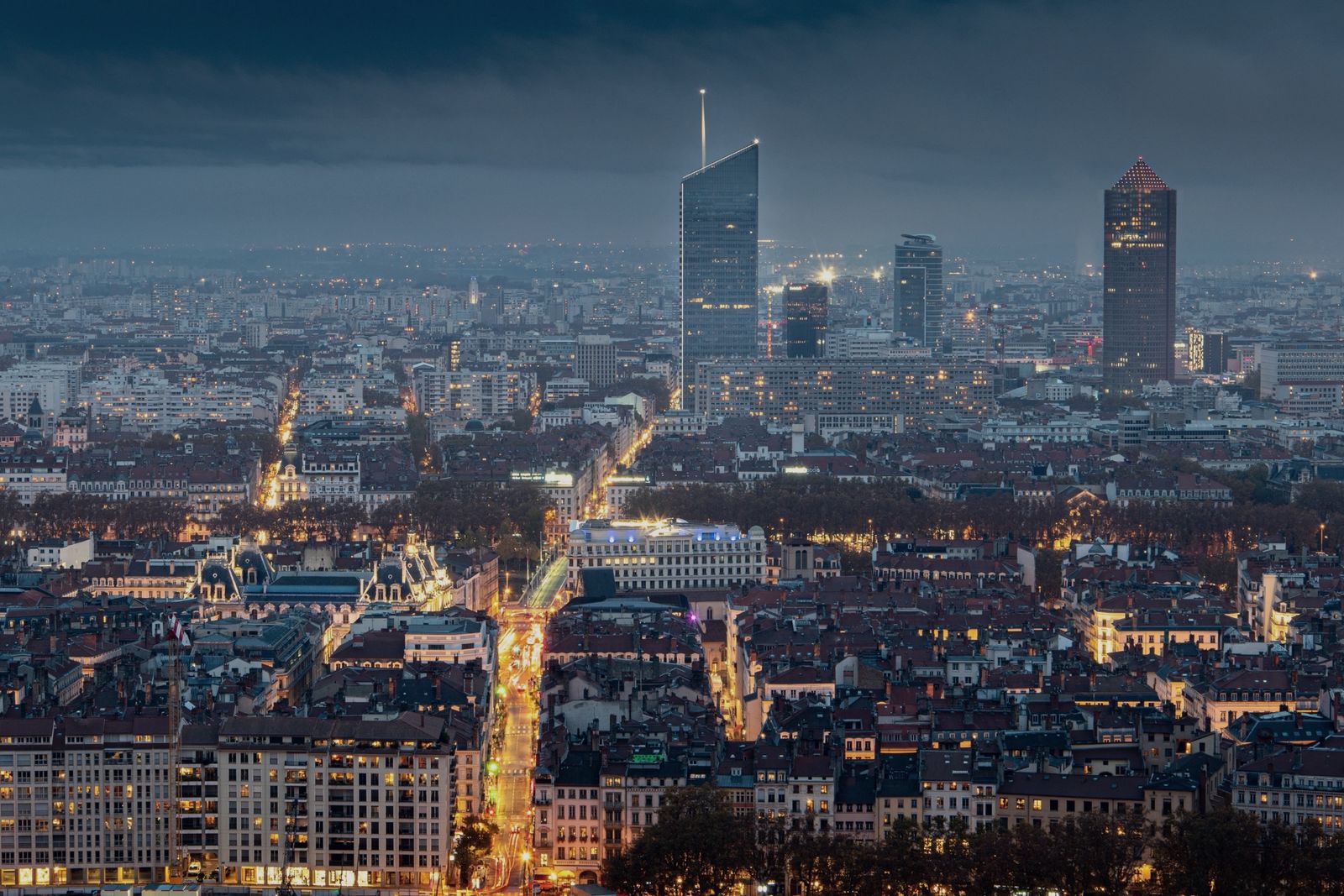
Lyon, France: home of IARC, of the Musée des Confluences at the meeting of the Rhône and the Saône, and of the Lumière brothers’ Cinématographe.
Institutes & Facilities
IARC, the WHO cancer agency, and the Musée des Confluences in Lyon.
Conferences & Events
Science events in Lyon connected with this site.
Science Travel
Visiting science in Lyon: the Musée des Confluences and the Institut Lumière.
Contact
Contact Lyon.science, part of the TheScience.fm Platform.
Articles
Read next
Is hot tea or coffee carcinogenic? Why IARC points to the temperature, not the drink
For coffee itself, IARC found no conclusive evidence that it causes cancer. What it did classify as probably carcinogenic, in 2016, was drinking any beverage very hot – above about 65 °C.
Do mobile phones cause cancer? What the 2011 “possibly carcinogenic” label meant, and what came after
In 2011 IARC classified radiofrequency electromagnetic fields, including those from mobile phones, as “possibly carcinogenic to humans”. That label meant limited evidence, not a demonstrated risk – and a large review published in 2024 found no link between mobile phone use and brain tumours.
Smog and cancer: what IARC’s Group 1 for air pollution means for Poland
Since 2013 IARC has classified outdoor air pollution as carcinogenic to humans (Group 1), with sufficient evidence for lung cancer. In Poland the component that stands out is benzo[a]pyrene, itself a Group 1 carcinogen, which comes largely from heating homes with coal and wood.
Glossary